Posts

Chile's Law 21,719 on Data Protection and VeriFlow.me's Crucial Role in Fraud Prevention

Image
Chile's Law 21,719 on Data Protection and VeriFlow.me's Crucial Role in Fraud Prevention In the digital age, protecting personal data is a cornerstone for the trust and security of individuals and businesses. In Chile, Law 21,719 on Personal Data Protection has marked a milestone, establishing a robust regulatory framework. However, legislation alone is not enough; it requires the support of innovative technological solutions. This is where companies like  VeriFlow.me  demonstrate their invaluable contribution to fraud prevention and identity protection. Understanding Chile's Law 21,719 on Personal Data Protection Law 21,719 significantly modernizes Chilean data protection regulations, aligning them with international standards such as the European GDPR. Its fundamental pillars include: Data Subject Rights: Strengthens ARCO rights (Access, Rectification, Cancellation, and Op...

Software Development & Security Best Practices: Lessons from Code Injections in Python & Node.js

Image
Software Development & Security Best Practices: Lessons from Code Injections in Python & Node.js In an increasingly digital world, software security has become an undeniable priority. Recent code injection incidents, particularly those affecting popular Python (like liteLLM ) and Node.js (like axios ) libraries through their official repositories, serve as stark reminders of the fragility of our systems if **robust development and security best practices** are not implemented from the outset. This post explores how we can build resilient defenses against sophisticated attacks, especially supply chain compromises. The Current Landscape of Cybersecurity in Software Development Code injection attacks are not new, but their evolution and sophistication are constant. From SQL injections to deserialization attacks or supply chain compromises (as seen in the Python and Node.js ecosystems), developers must rem...

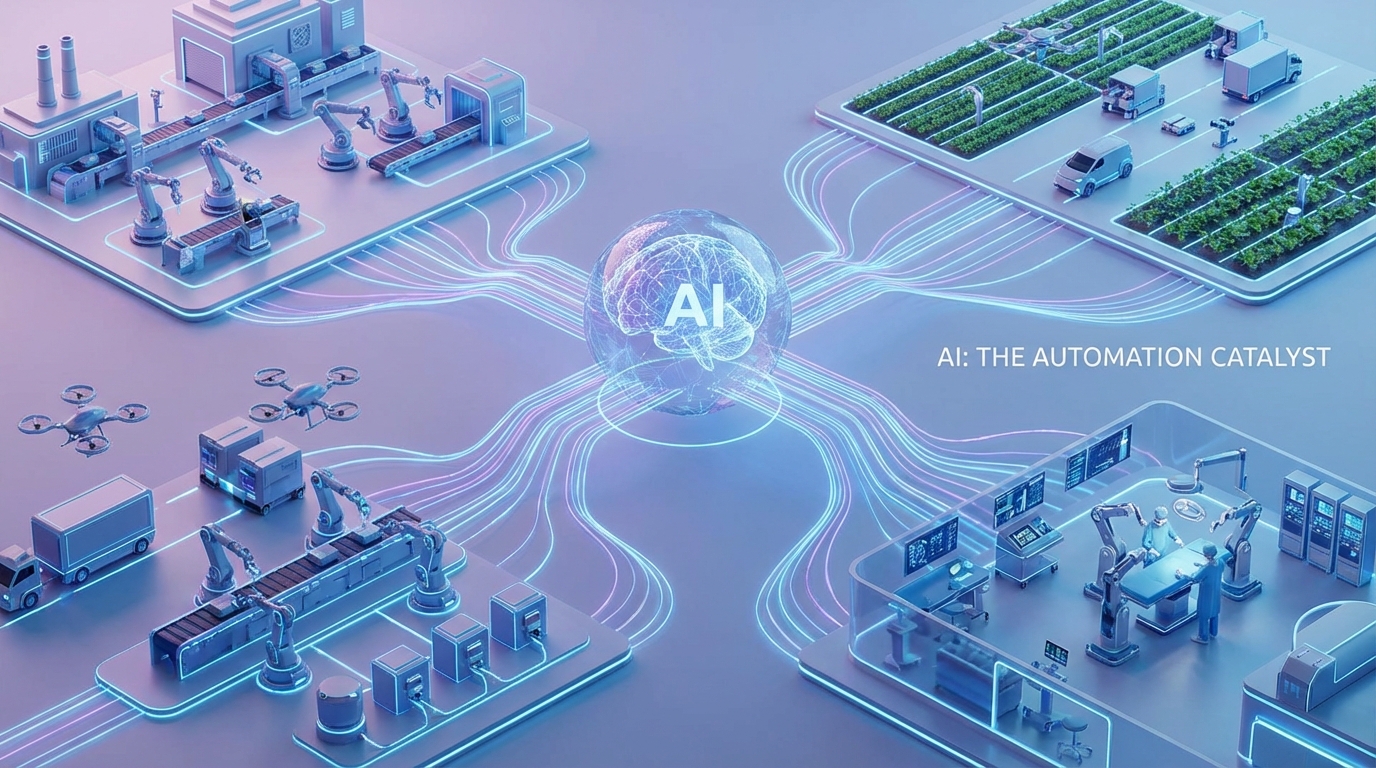
Automation in the AI Era: Transforming Industries and Empowering the Future

Image
Automation in the AI Era: Transforming Industries and Empowering the Future The dawn of Artificial Intelligence has ushered in an era of unprecedented transformation, fundamentally reshaping how industries operate and how work is accomplished. Automation, once a buzzword confined to manufacturing plants, is now evolving at an exponential pace, driven by the sophisticated capabilities of AI. This synergy between AI and automation isn't just about replacing manual labor; it's about augmenting human potential, creating new opportunities, and fostering innovations that were once relegated to the realm of science fiction. The Evolution of Automation: From Repetitive Tasks to Intelligent Systems Historically, automation focused on repetitive, rule-based tasks. Industrial robots on assembly lines, automated data entry, and basic process flows were the hallmarks of early automation. While incredibly impactful, these systems lacked the cognitive abilities to handle va...

Cross-Platform Applications: Unmet Needs and the Community's Response

Image
In today's digital age, the demand for cross-platform applications is higher than ever. With users spread across various platforms - from Windows and macOS to Linux and mobile devices like iOS and Android - companies face the challenge of providing uniform and satisfactory experiences across all these environments. However, the reality is that many companies fail to meet all user needs on each platform, leaving gaps that the developer community often feels compelled to fill. The Case of WhatsApp and Its Absence on Linux A prime example of this phenomenon is WhatsApp, one of the world's most popular messaging applications. Despite its wide adoption, WhatsApp does not offer a native application for Linux users, limiting its accessibility to web browsers or unofficial solutions. This omission has led independent developers to create unofficial versions of WhatsApp for Linux, improving user experience and ensuring the platform is accessible without significant restrictions. The Lin...

Quantum Algorithms: Driving Innovative Solutions for Global Challenges

Image
Quantum computing is one of the most advanced and promising areas of technological research. With its unique ability to process information through qubits, which can exist in multiple states simultaneously, this technology is redefining what is possible in terms of computation and solving complex problems. The Promise of Quantum Computing Qubits, unlike traditional bits, enable quantum computers to perform calculations at a speed and complexity that classical systems cannot match. This is due to phenomena such as superposition and quantum entanglement, which are the cornerstones of this technology. Practical Applications Quantum computing has the potential to transform a variety of fields, including simulating chemical systems, machine learning, urban traffic management, cryptography, medicine, and materials engineering. For example, in the healthcare sector, it can accelerate drug discovery and improve the accuracy and speed of medical diagnoses. Advanced Quantum Algorithms Some of th...