Automation in the AI Era: Transforming Industries and Empowering the Future
Automation in the AI Era: Transforming Industries and Empowering the Future
The dawn of Artificial Intelligence has ushered in an era of unprecedented transformation, fundamentally reshaping how industries operate and how work is accomplished. Automation, once a buzzword confined to manufacturing plants, is now evolving at an exponential pace, driven by the sophisticated capabilities of AI. This synergy between AI and automation isn't just about replacing manual labor; it's about augmenting human potential, creating new opportunities, and fostering innovations that were once relegated to the realm of science fiction.
The Evolution of Automation: From Repetitive Tasks to Intelligent Systems
Historically, automation focused on repetitive, rule-based tasks. Industrial robots on assembly lines, automated data entry, and basic process flows were the hallmarks of early automation. While incredibly impactful, these systems lacked the cognitive abilities to handle variability, learn from data, or adapt to changing conditions. The integration of AI, particularly machine learning, natural language processing, and computer vision, has propelled automation into a new dimension. Intelligent automation systems can now:
- Process unstructured data: Extract insights from text, speech, and images, moving beyond structured databases.
- Learn and adapt: Continuously improve performance based on new data and feedback, without explicit reprogramming.
- Make decisions: Automate complex decision-making processes that previously required human intervention.
- Interact naturally: Engage with humans through conversational AI, making technology more accessible.
AI-Powered Automation in Action: Industry-Specific Transformations
The impact of AI-driven automation is vast, touching nearly every sector:
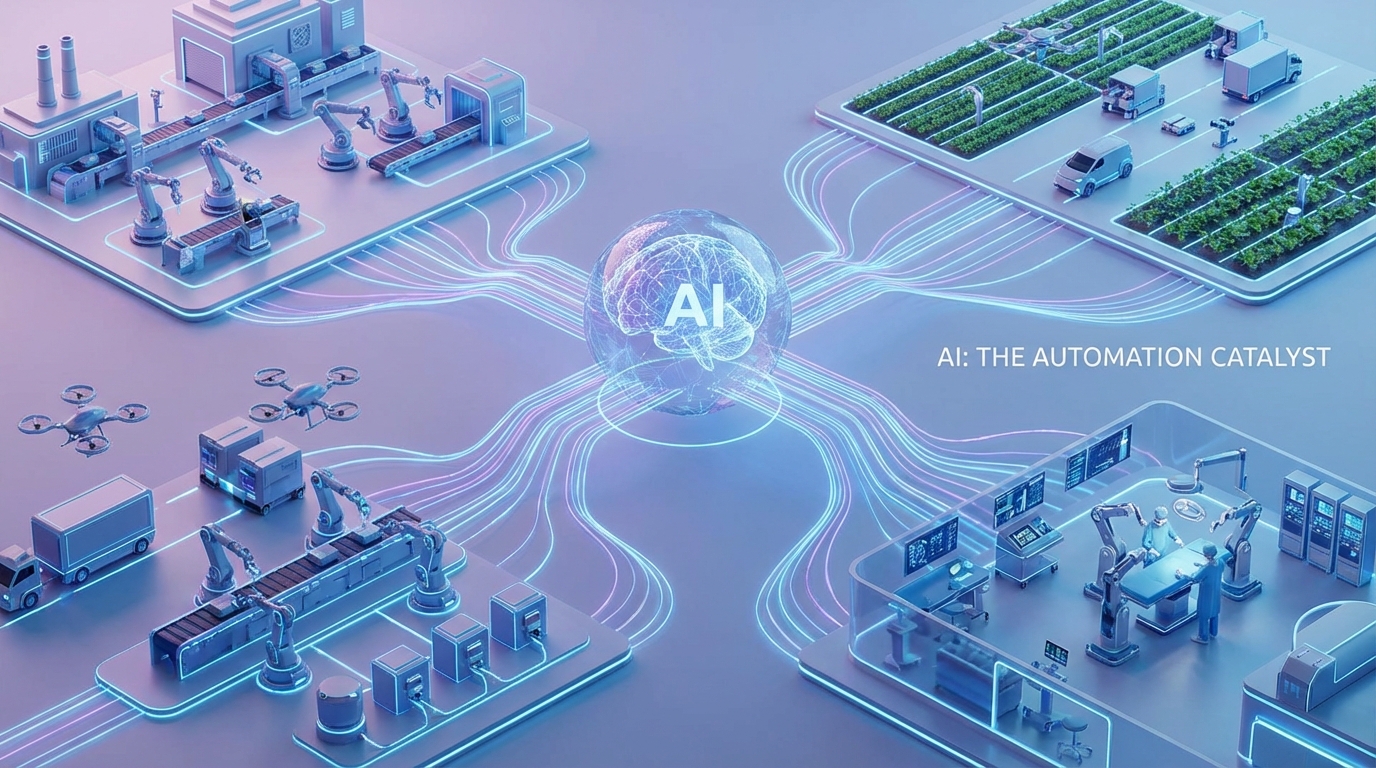
- Manufacturing: Predictive maintenance, quality control through computer vision, and autonomous robotics are optimizing production lines, reducing downtime, and enhancing safety.
- Healthcare: AI automates administrative tasks, analyzes medical images for early disease detection, and assists in drug discovery, freeing up medical professionals to focus on patient care.
- Finance: Fraud detection, algorithmic trading, and personalized financial advice are being revolutionized by AI, leading to more secure and efficient financial operations.
- Customer Service: Intelligent chatbots and virtual assistants handle routine inquiries, providing instant support and escalating complex issues to human agents, improving customer satisfaction and operational efficiency.
- Logistics and Supply Chain: AI optimizes routing, inventory management, and demand forecasting, leading to more resilient and responsive supply chains.
Challenges and Ethical Considerations
While the benefits are undeniable, the rapid adoption of AI automation also presents significant challenges:
- Job Displacement: The fear of job losses due to automation is a legitimate concern. Societies must invest in reskilling and upskilling programs to prepare the workforce for new roles that emerge in the AI economy.
- Ethical AI: Ensuring fairness, transparency, and accountability in AI systems is paramount. Biased algorithms can perpetuate and amplify societal inequalities, necessitating robust ethical guidelines and regulatory frameworks.
- Security and Privacy: Automated systems often handle vast amounts of data, making data security and privacy critical concerns. Robust cybersecurity measures are essential to protect against breaches and misuse.
The Future is Collaborative: Humans and AI Working Together
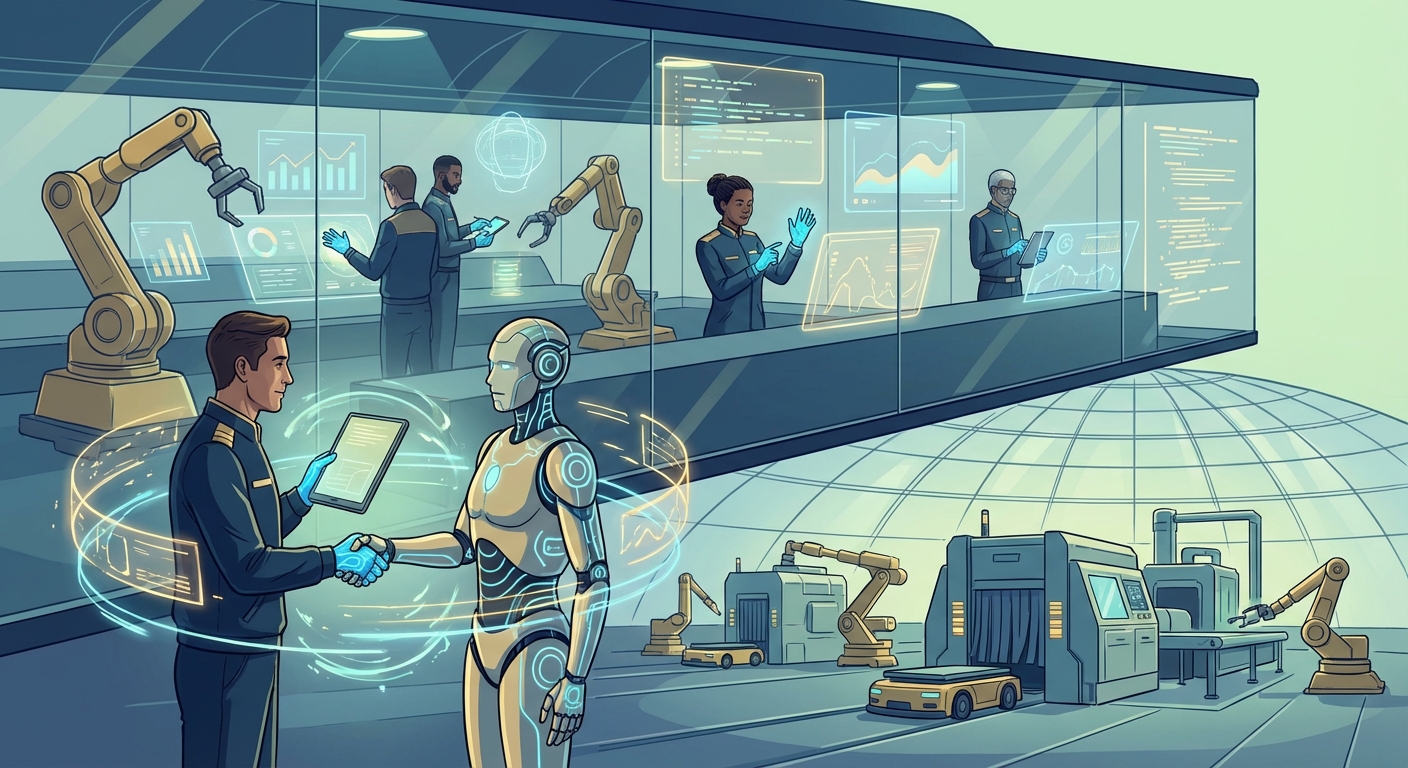
The future of automation isn't about machines replacing humans entirely, but rather about a powerful collaboration between human intelligence and artificial intelligence. AI will handle the data-intensive, repetitive, and optimizing tasks, allowing humans to focus on creativity, critical thinking, empathy, and complex problem-solving. This symbiotic relationship will unlock new levels of productivity, innovation, and ultimately, human flourishing.
As we navigate this exciting new chapter, continuous learning, ethical development, and thoughtful implementation will be key to harnessing the full potential of AI-powered automation for a better future.